Best Tracers.com Skip Tracing Alternatives & Competitors
 Edited byJames Vasquez
The popular advice is to find the skip-tracing database with the most records and call it the best. That approach misses the operational question. A tool can return a name without identifying the right decision maker, provide a phone number without showing whether it remains usable, or offer deep investigative data that a small team can't access without credentialing and a contracted plan.
The right alternative depends on the search job. Compare entity and person coverage, relationship mapping, batch and API delivery, onboarding requirements, pricing structure, permissible-use controls, and whether the product is a primary data source or a complementary data-hygiene layer. The ten resources below are evaluated by the work they're best equipped to perform, from tracing an LLC to its officers to preparing a large calling list for compliant outreach.
SkipForge is the strongest integrated option for U.S. entity and person tracing, bulk files, and structured exports. Enterprise suites such as Thomson Reuters CLEAR, TransUnion TLOxp, LexisNexis Accurint, IDI, Delvepoint, and IRBsearch fit credentialed investigations and recovery operations. Enformion emphasizes low-friction enrichment, BatchSkipTracing serves real-estate-oriented bulk work, and LocateSmarter is most useful as a dialing-readiness and data-hygiene layer. None removes the need to confirm lawful use, validate returned records, and test representative searches before scaling.
1. SkipForge
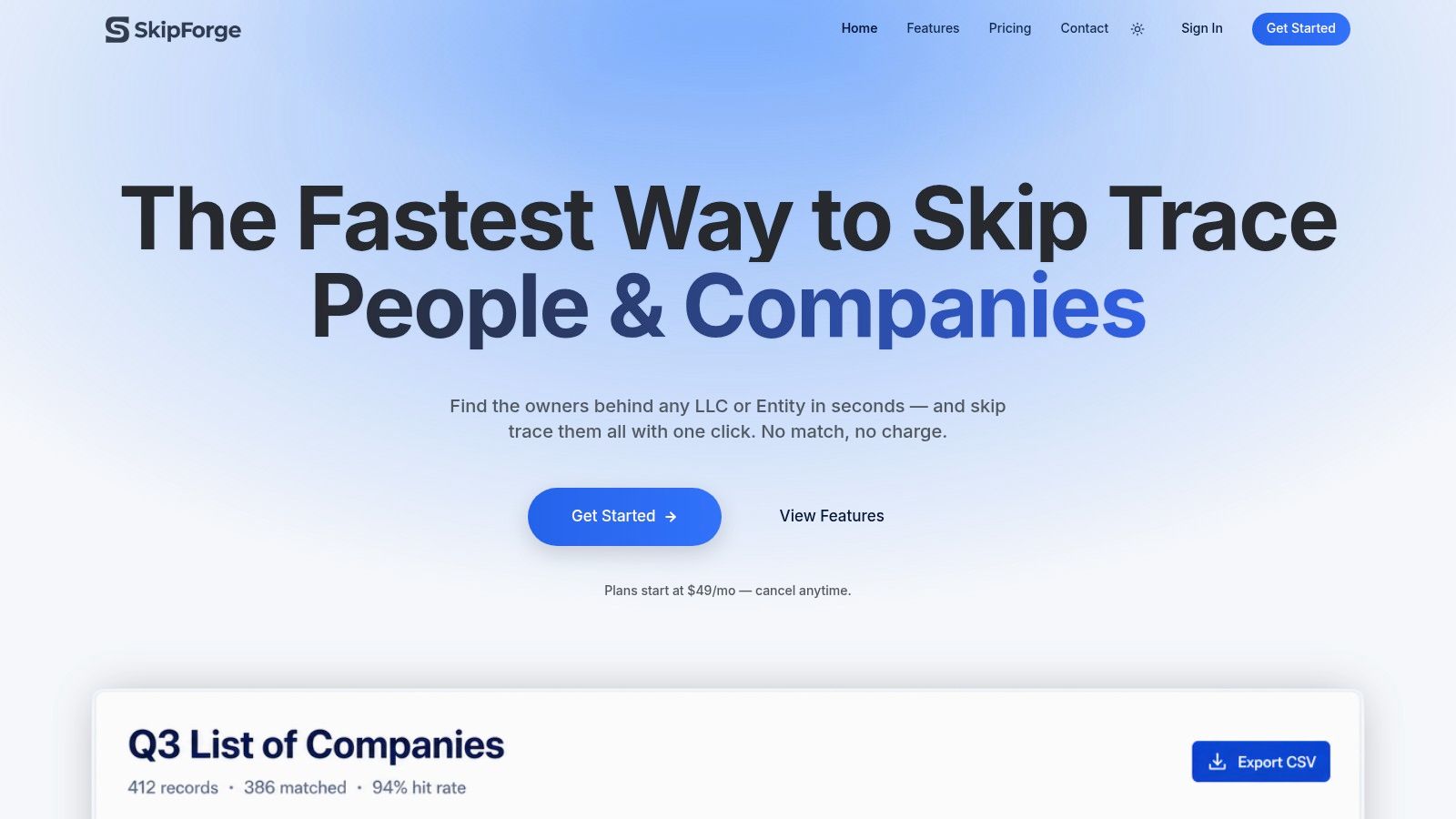
SkipForge is built for teams that need to move from an entity or person record to usable contact paths without stitching together several research tools. It combines U.S. business and individual tracing in one web interface, which makes it especially relevant when the target is an LLC, registered business, property owner, or small-business decision maker.
The entity workflow returns registration details plus officers and members. Officer-to-person tracing then links those listed individuals to contact records, while reverse entity search works in the opposite direction when a user starts with available business attributes. A multi-source data waterfall supports the searches, and relatives or known associates can provide alternate outreach paths when the primary contact isn't reachable.
Best fit for entity-to-person tracing
SkipForge is a practical choice for real estate investors, wholesalers, B2B lead-generation teams, collections agencies, investigators, process servers, and enrichment teams that need both one-off lookups and list processing. Users can upload CSV or XLSX files, rely on automatic column detection, let large jobs process in the background, and download compiled CSV results formatted for CRM or dialer ingestion.
Practical rule: Treat relatives and associates as alternate research paths, not automatic substitutes for the intended contact. Confirm identity, purpose, and outreach permissions before using any returned record.
The billing model is more flexible than a fixed enterprise contract. Pay-as-you-go credits require a minimum top-up of $25, purchased credits don't expire, and “no match, no charge” limits fees to searches that return results. The Pro subscription starts at $49 per month and includes monthly credits with lower per-search rates. Support is self-serve through the FAQ and Help Center, with email assistance available.
Limitations to consider
Coverage is U.S.-focused, so international tracing requires another source. The public product information doesn't list phone support or certifications, and record quality can vary. Users remain responsible for compliance with applicable contact, marketing, privacy, and outreach laws.
Visit SkipForge to review the platform's entity searches, person searches, bulk processing, and export workflow.
2. Thomson Reuters CLEAR
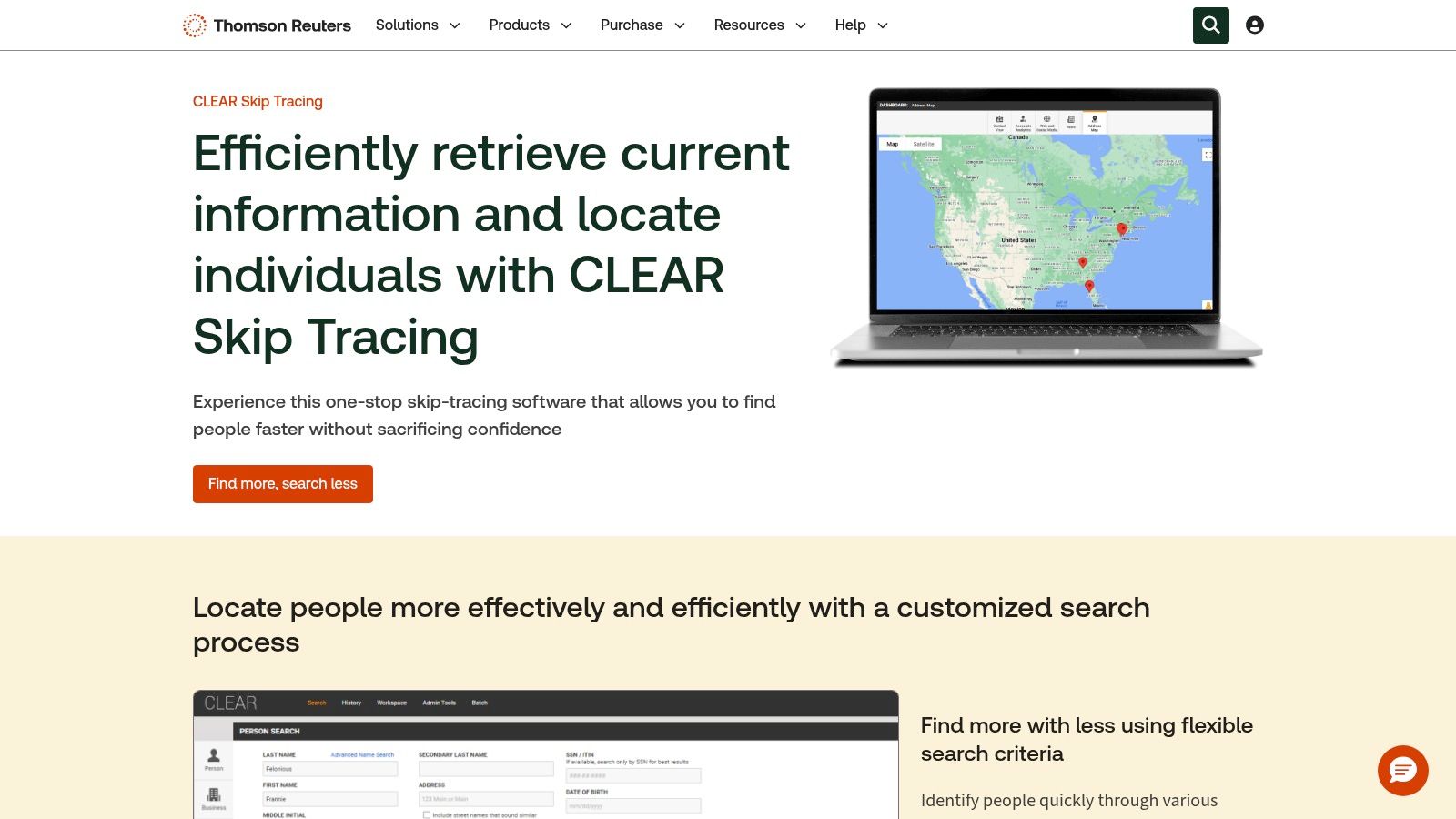
Thomson Reuters CLEAR is designed for enterprise investigations, not casual list enrichment. Its strongest use case is a team that needs person, business, phone, vehicle, incarceration, credit-header, adverse-media, and related investigative data within a controlled professional environment.
The platform supports desktop searches, API access, and batch delivery. That matters for organizations that alternate between an investigator working a single file, an operations team processing a portfolio, and a technical group embedding searches into an internal system. Analytics, map analytics, report customization, and export tools add context beyond a basic phone or address result.
Where CLEAR earns its place
Collections, legal, corporate-risk, and public-sector users may value the combination of broad datasets and investigative workflow support. Add-on capabilities such as ID Confirm and Risk Inform can extend the product beyond a simple locate search, while live gateways connect workflows to categories such as vehicle or DMV data, phone data, and adverse media.
The trade-off is access friction. Pricing is customized and typically tied to fixed monthly commitments, while credentialing and contracting can extend onboarding. Smaller teams should compare the cost of unused capacity, administrative review, and implementation work rather than focusing only on the search function.
The best enterprise database is often the one your team can lawfully access, integrate, and document, not the one with the longest feature list.
CLEAR makes more sense when analytics, reporting, API delivery, and professional investigative controls are central. It's less attractive for a user who needs a transparent, intermittent, credit-based workflow for occasional U.S. business and person lookups. For a broader explanation of how service selection affects outcomes, see this guide to choosing a skip-tracing service.
Explore Thomson Reuters CLEAR.
3. TransUnion TLOxp
TransUnion TLOxp, available through the TruLookup line, is a strong fit for professional locate work and relationship mapping. Its value isn't limited to finding a phone number or address. The platform is designed to help users connect people, addresses, phones, and associated relationships while prioritizing information relevant to right-party contact.
TLOxp supports online searches, batch processing, and API delivery. That combination gives investigators and operational teams a path from individual research to repeatable portfolio workflows. Its source base includes more than 10,000 public and proprietary sources, as described by TransUnion's TruLookup skip-tracing information.
Best fit for relationship analysis
Private investigators, collections teams, process servers, and law firms are the natural audience. Ranked phone activity and right-party contact optimization can help users distinguish a long list of possible numbers from the contacts most likely to be relevant to the person being sought. Relationship analysis is also useful when a direct match is weak but associated people or addresses provide additional investigative leads.
TLOxp is not a low-friction consumer lookup product. List pricing isn't public, plans are negotiated, and access may involve compliance review and a site inspection. Those requirements can protect the integrity of the data environment, but they also make onboarding slower and less predictable for smaller organizations.
What to test before adoption
Ask whether the delivery method fits the actual team. A PI may favor online research, while a recovery operation may need batch output or API access. Also review how the platform records user activity, handles permissible purpose, and supports internal audit requirements.
The key distinction is depth versus convenience. TLOxp is a candidate when relationship intelligence and professional access controls matter more than transparent self-serve pricing. A lean sales team seeking occasional owner contact data may get more operational value from a simpler platform.
4. LexisNexis Accurint
LexisNexis Accurint is aimed at collections, recovery, and compliance-oriented locate operations. Its Accurint linking technology connects people, phones, workplaces, businesses, relatives, and associates, while the collections product emphasizes right-party contact and prioritized outreach rather than raw record volume.
Person and phone Plus searches support deeper locate work. Batch address and phone append wizards make the platform suitable for portfolios, and monitoring triggers can help teams respond when relevant information changes. That monitoring capability separates Accurint from tools intended mainly for a single upload followed by a one-time export.
Strongest use case
A recovery organization handling repeatable, regulated processes is more likely to benefit than a small operator doing occasional research. Purpose-built workflows for FCRA-regulated datasets, portfolio monitoring, and enhanced locate searches can support governance alongside search operations. Teams should still confirm the specific permissible purpose for each workflow, because access to a dataset doesn't automatically authorize every form of outreach or decision-making.
The main constraints are commercial and procedural. Pricing is negotiated and varies by plan and permissible use. Credentialing and compliance reviews can also lengthen onboarding, so implementation should include legal, security, and operations stakeholders rather than treating the purchase as a simple software signup.
Workflow insight: Monitoring is valuable only when someone owns the resulting alert. Define the review and outreach process before paying for a feature the team may ignore.
Accurint is best viewed as an enterprise locate and data-governance environment. If you need an easier way to compare self-serve tracing and enrichment tools, the SkipForge listings provide a useful starting point for evaluating adjacent options.
Review LexisNexis Accurint Collections and Locate.
5. IDI idiCORE
IDI's idiCORE is a modern identity-intelligence platform for investigative teams that need more than basic contact append. It combines contact records with associates, relatives, assets, vehicles, and indicators such as deceased status, criminal information, or bankruptcy data. The product is available through a web interface, batch services, and API delivery.
That delivery mix gives idiCORE flexibility across investigative departments. An analyst can work in the interface, an operations group can submit bulk files, and a product team can integrate data into an internal application. Map-based proximity tools and reported vehicle or LPR sightings add a location-oriented dimension for cases where contact data alone doesn't resolve identity.
When broader intelligence matters
IDI fits investigations where the relationship between a person, an asset, an address, and an associated individual is part of the question. It's less clearly differentiated for a team that only needs to enrich a prospect list with phone and email fields. In that scenario, the additional datasets may add cost and governance requirements without improving the immediate workflow.
Public pricing isn't listed, so buyers should request a scope that separates standard searches, batch usage, API access, and advanced datasets. Certain sensitive data categories may require additional vetting or approval, which should be treated as part of implementation rather than a surprise after purchase.
The platform's skip-tracing resources from IDI can help prospective users assess whether its investigative orientation matches their use case. For broader workflow context, the SkipForge blog also covers practical questions around tracing and enrichment.
6. Delvepoint
Delvepoint is a strong candidate for private investigators and collections teams that need an operator-friendly investigative workspace. Person, business, and associate searches sit alongside report bundling, batch services, monitoring, audit tools, and vehicle-sighting capabilities. The design emphasizes how an investigator works a file, not just how a database returns a field.
The LPR-related vehicle search and monitoring features can help teams investigate movement and location signals when appropriate access and lawful purpose exist. Its Watchdog monitoring capability supports continuing oversight rather than a single point-in-time search. That's useful for cases where new information may change the next action.
Why investigators may prefer it
Delvepoint's advantage is workflow fit. A user can assemble reports, manage related searches, monitor a subject, and maintain an audit trail within a platform built for investigative operations. Collections users may also value the combination of person, business, associate, and batch capabilities.
Sensitive data access may require additional credentialing and vetting. Pricing details require contact, and volume discounts are tied to the commercial arrangement. Prospective buyers should ask which functions are included in the base plan, which require approval, and whether monitoring or vehicle data creates separate usage charges.
Compliance belongs in the search design. Decide who may access sensitive datasets, what purpose justifies access, and how the team will document the result before enabling advanced features.
Delvepoint is therefore a better fit for a credentialed investigative practice than for a sales team looking for instant, low-friction enrichment. Its investigative skip-tracing platform is worth evaluating when report management and ongoing case work matter as much as contact discovery.
7. IRBsearch
IRBsearch is built for users who want a broad investigative search menu with flexible commercial models. The platform covers people, businesses, vehicles, phones, and reports, with additional functions for phone finding, vehicle sightings, and Watchdog monitoring.
That breadth supports several workflows in one account. A private investigator may move from a person search to a vehicle report, while a collections team may use monitoring and batch services for ongoing work. The integrated LPR access is particularly relevant to investigative users who need vehicle-related intelligence rather than only identity and contact fields.
Where its pricing model helps
IRBsearch offers transactional, per-seat, and flat-rate pricing models. That range can suit organizations with different usage patterns, but transactional plans may include monthly minimums. Pricing is provided after application, and credentialing plus agreement to terms are part of access.
The practical comparison is between flexibility and predictability. A small practice may appreciate avoiding a single rigid plan, while a high-volume operation should model minimums, seats, batch usage, monitoring, and advanced search costs together. Ask for a written example based on representative activity instead of evaluating only the headline model.
IRBsearch also offers trial access upon approval, which can help a team test the interface and report structure before committing. Use that trial to compare actual search inputs and outputs, not just the number of available search types.
See IRBsearch's investigative search platform.
8. Enformion EnformionGO
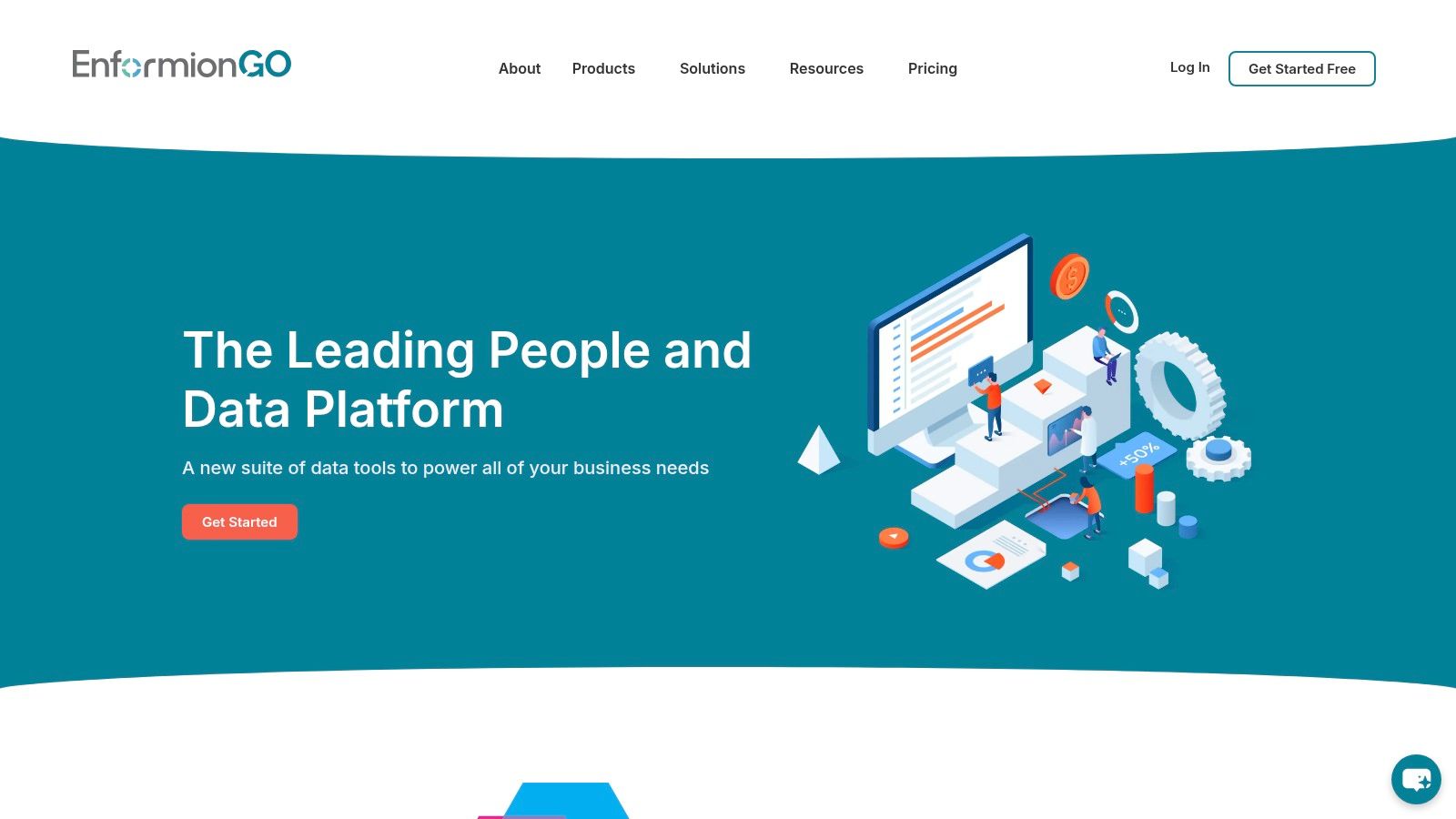
EnformionGO is the clearest choice here for low-friction enrichment and transparent self-serve access. It covers people, property, business, assets, licenses, reverse phone, and reverse email searches through web, batch, and API workflows. That combination suits real estate, sales enrichment, and smaller businesses that don't want to begin with a negotiated enterprise contract.
The onboarding and billing approach are the differentiators. Enformion offers a free trial with up to 100 matches per month, followed by a Starter pay-per-match plan. Starter has no contracts or monthly minimums, giving teams a way to test usage-based economics before committing to a larger operating model. Those figures and plan details come from the EnformionGO platform.
The important boundary
EnformionGO isn't a universal replacement for credentialed investigative databases. Certain criminal and court datasets are gated to higher tiers and approved use cases. The product is designed for non-FCRA use, so it isn't appropriate for employment or credit decisions.
That limitation is a strength when it forces buyers to define their use case clearly. A sales or property-enrichment team can focus on contact and business data without paying for investigative features it doesn't need. A collections or legal organization should instead confirm whether its intended purpose and required datasets fit the product's permitted-use framework.
The best test is operational: upload representative records, inspect the returned fields, check export compatibility, and document which data is used for which action. EnformionGO's accessible pricing makes that evaluation easier than a fully negotiated platform, but users still need governance around outreach and data retention.
9. LocateSmarter
LocateSmarter is best understood as a dialing-readiness and data-hygiene layer, not necessarily as a complete primary identity source. Its LocateSmarter Online platform supports skip-trace workflows, batch services, configurable outputs, and list preparation for dialer or CRM ingestion.
The distinctive capabilities focus on phone quality and compliance operations. Cell and VoIP scrubs, ported-number detection, and daily updates help teams identify phone-type and status issues before outreach. High-volume dialing teams can use those controls to reduce avoidable calls and improve the handoff between a primary data provider and the calling system.
Best used alongside another source
LocateSmarter may need to be combined with a primary data source for full identity enrichment. That distinction matters because a scrubbed phone list still depends on the original provider for names, addresses, entity relationships, and contact matching. Buying both layers can be sensible, but the total workflow cost includes skip-trace data, scrub subscriptions, processing, and internal review.
The compliance orientation is useful, but no tool makes outreach lawful by itself. Teams should define how they handle consent, Do Not Call requirements, phone-type restrictions, ported numbers, and internal suppression lists. Daily updates can support that process, but users must configure and follow the process consistently.
Subscription-priced scrub packages and separate skip-trace data costs may make LocateSmarter less attractive for intermittent users. It's a compelling option when list volume and pre-dial quality justify a dedicated hygiene step.
Evaluate LocateSmarter's skip-tracing and data-hygiene tools.
10. BatchSkipTracing through BatchLeads and BatchData
BatchSkipTracing is aimed at real-estate-oriented bulk outreach. Its workflow centers on file upload, field mapping, rapid returns, and per-match billing. Through the BatchLeads and BatchData ecosystem, it can fit users already organizing property and owner workflows in that environment.
The product's appeal is operational simplicity. A real estate team can prepare a list, upload it, receive returned contact fields, and move the output into its outreach process without adopting a full investigative suite. Per-match charges and no-match refunds make the economics easier to understand than a large platform with negotiated modules, although campaign-volume pricing details should be verified before scaling.
Where it may fall short
BatchSkipTracing may offer less investigative depth than enterprise databases. That isn't automatically a defect. A wholesaler tracing property-owner lists may prioritize straightforward bulk processing, while a process server or recovery investigator may need relationship mapping, monitoring, vehicle information, or credentialed datasets.
Users should compare the platform's entity resolution, supported input fields, export structure, turnaround expectations, and refund treatment on their own records. A free account signup and lack of required subscription can reduce the initial barrier, but the right question is whether the returned data fits the team's actual disposition and outreach workflow.
Use BatchSkipTracing pricing context from SkipForge alongside the BatchLeads platform when estimating total cost. Confirm current campaign terms directly, particularly if list size, integrations, or repeat uploads will change the billing model.
Top 10 Skip Tracing Alternatives & Competitors, Feature Comparison
Product Core features Quality ★ Pricing & Value 💰 Target audience 👥 Unique strength ✨ SkipForge 🏆 Entity + person search; bulk CSV/XLSX uploads; multi-source waterfall; officer→person linking ★★★★☆ high match rates 💰 Pay‑as‑you‑go (min $25) or Pro $49+/mo; non‑expiring credits; no‑match no‑charge 👥 RE investors, B2B sales, collections, PIs, marketing ✨ Officer-to-person linking, relatives/associates discovery, CRM-ready CSVs Thomson Reuters CLEAR Enterprise person/business/vehicle searches; analytics; desktop/API/batch ★★★★★ enterprise-grade 💰 Custom enterprise pricing; monthly commitments 👥 Legal, collections, corporate risk, public sector ✨ Live gateways (DMV, credit-header), advanced analytics TransUnion TLOxp 10k+ sources; relationship mapping; ranked phone activity; API/batch ★★★★☆ deep coverage 💰 Negotiated pricing; onboarding/credentialing required 👥 PIs, collections, law firms ✨ Right-party contact optimization; ranked phone signals LexisNexis Accurint Person/phone Plus searches; batch append; portfolio monitoring; FCRA workflows ★★★★☆ mature enterprise 💰 Negotiated pricing tied to permissible use; compliance review 👥 High-volume collections & recovery teams ✨ FCRA-aware workflows and monitoring triggers IDI (idiCORE) Identity intelligence; associates, assets, vehicles; UI/API/batch ★★★★☆ strong modern coverage 💰 Custom pricing; vetting for advanced datasets 👥 Investigators, skip-trace teams, analytics ✨ Map tools, LPR sightings, flexible delivery modes Delvepoint Investigator-focused searches; report bundling; LPR (DRN); Watchdog ★★★★☆ PI-optimized 💰 Contact for pricing; LPR add-ons 👥 Private investigators, collections ✨ LPR vehicle sightings and Watchdog monitoring IRBsearch 40+ searches; vehicle sightings; Watchdog; phone finder; trial access ★★★★☆ comprehensive 💰 Multiple models (transactional, per-seat, flat-rate); minimums may apply 👥 Investigators, PI firms, collections ✨ Integrated LPR + flexible pricing options Enformion (EnformionGO) Self-serve people/business/property searches; API/batch; free tier ★★★☆☆ SMB-friendly 💰 Clear public pricing; free tier (up to 100 matches/mo) 👥 Real estate, SMBs, sales enrichment ✨ Transparent pay-for-matches and easy onboarding LocateSmarter Skip-trace platform with cell/VoIP scrubs, ported-number detection, batch outputs ★★★★☆ compliance-focused 💰 Subscription scrub packages; separate data costs 👥 High-volume dialers, TCPA/compliance teams ✨ Daily cell/VoIP scrubs and ported-number detection BatchSkipTracing (BatchLeads) Bulk uploads, rapid returns, per-match billing, integrations with property tools ★★★☆☆ optimized for RE 💰 Per-match pricing; no subscription; no-match refunds 👥 Real-estate investors, owner outreach teams ✨ Simple per-match economics and BatchLeads integrations Match the Database to the Workflow
The market is expanding, but expansion doesn't make one provider suitable for every search. One market estimate places global skip-tracing services at $2.1 billion in 2024 and projects $4.3 billion by 2033, an 8.2% CAGR over that forecast period, while another estimate places the platform segment at $2.1 billion in 2025 and $3.8 billion by 2034. These figures come from MarketIntelo's skip-tracing market report, and the difference between estimates is itself a reason to compare workflow economics rather than accept a single market narrative.
The same platform estimate assigns 52.8% of 2025 revenue to North America, or about $1.1 billion, and says software holds 62.3% of market share. That points to a commercially mature U.S. software market, but it doesn't prove that any individual vendor will return the right contact for your records. A match count is an input. Right-party contact, current phone status, lawful purpose, and useful export structure determine whether the input becomes productive work.
Choose based on the job:
- Choose SkipForge for combined U.S. entity and person tracing. It's the most direct fit when teams need to identify officers or members behind businesses, connect them to individual contact records, process CSV or XLSX files, and export structured results. Pay-as-you-go credits, non-expiring purchased credits, and “no match, no charge” suit intermittent projects as well as recurring work.
- Choose enterprise investigative suites for credentialed data and oversight. Thomson Reuters CLEAR, TransUnion TLOxp, LexisNexis Accurint, IDI, Delvepoint, and IRBsearch are better candidates when analytics, relationship mapping, monitoring, API delivery, sensitive datasets, report management, or formal access controls are central. Expect negotiated pricing and more involved onboarding.
- Choose EnformionGO for transparent self-serve enrichment. Its free tier, pay-per-match model, batch and API support, and non-FCRA positioning make it suitable for teams that need accessible business, property, asset, or contact enrichment without a large contract. Confirm that the intended use fits its data restrictions.
- Choose BatchSkipTracing for real-estate-oriented bulk work. It's a practical candidate for property and owner lists where file upload, per-match economics, rapid output, and a low-friction account matter more than investigative depth.
- Choose LocateSmarter as a dialing-readiness layer. Use it to scrub and organize phone data before CRM or dialer ingestion, particularly when cell, VoIP, ported-number, and update handling are important. Don't mistake phone hygiene for complete identity enrichment. A primary source may still be required.
The broader data environment supports this layered approach. Privacy research classified 113 of 540 registered brokers across California and Vermont as people-search services, or 21%, while an earlier Vermont-only sample classified 133 of 238, or 56%. The Privacy Rights Clearinghouse analysis of registered data brokers shows why searchable identity data remains commercially significant, while also underscoring that availability and lawful use are separate questions.
Contact data also decays. One 2026 industry article says old databases are often 30 to 90 days stale and recommends retracing active outreach lists every 72 hours, using a confidence score and at least two providers before outreach. That benchmark appears in Goliath Data's discussion of why free skip tracing fails, and it supports a practical buying principle: evaluate refresh, confidence, and source diversity, not only the first returned record.
Geography changes the decision too. Benchmarks cited by HG Insights on B2B data-enrichment accuracy place typical U.S. match rates at 70% to 90%, Western Europe at 65% to 85%, and Asia Pacific at 30% to 40%. Those regional differences reflect sourcing and regulatory constraints, so a U.S.-focused product shouldn't be presented as universally suitable for European or Asia-Pacific workflows.
Finally, validate before scaling. Test representative records, compare entity-to-person resolution, inspect phone and email fields, confirm export mapping, review permissible-use controls, and calculate the full workflow cost, including subscriptions, credits, minimums, scrubs, API access, staff review, and compliance operations. The right Best Tracers.com alternative is the one that fits the search job and the organization's legal and operational boundaries, not the one that promises the broadest database.
SkipForge combines U.S. business and person tracing, officer-to-person linking, bulk CSV or XLSX processing, multi-source enrichment, and CRM-ready exports in one workflow. If that matches your need for entity-to-person research or flexible list enrichment, visit SkipForge to review the available search and credit options.
Edited by
James Vasquez
Real Estate Investor & Land Specialist with 10+ years experience in residential flipping, vacant land investing, land wholesaling, and subdivision deals.
Disclaimer: The information provided is for educational purposes and does not constitute financial or legal advice. Always consult with licensed professionals before making investment decisions.